
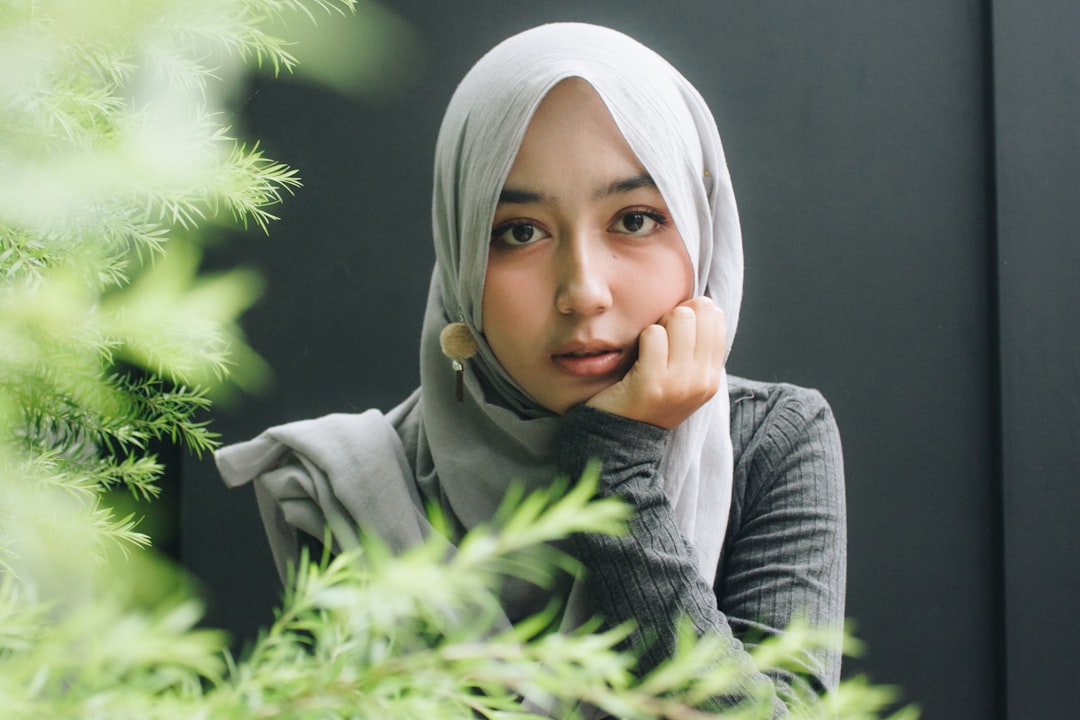
Visa photo head coverings are generally allowed when worn daily for religious reasons, but the entire face must remain visible from chin to forehead, with both eyes unobstructed and no shadows across the face. Hats, fashion scarves, and nonreligious coverings are usually not accepted. Requirements vary by country and application type, so check the issuing authority’s current instructions. Let’s measure it before we submit it: close is not compliant.
A visa photo head covering can be acceptable, especially when it is worn daily for religious reasons, but permission does not mean the photograph is automatically compliant. Your full face must remain clearly visible, your eyes must be unobstructed, and the covering must not create shadows or conceal identifying features. Hair is usually allowed to appear naturally, yet strands, volume, and accessories can still affect facial visibility and head-size measurements.
The safest approach is to separate the rules into three questions: why you are wearing the covering, which authority is reviewing the image, and whether the photograph still meets its exact composition requirements. U.S. visa, Schengen visa, and other national standards can differ. A millimeter has ruined more applications than a dramatic passport photo ever did, so let’s measure it before we submit it.
Why Head Coverings and Hair Rules Matter in Visa Photos
Head coverings are evaluated differently from ordinary hats. A religious head covering may be accepted when it is part of your daily religious practice. That allowance does not remove the normal biometric requirements: the face must be visible, the eyes must be open and clearly shown, and the covering must not cast a shadow over the forehead, cheeks, or eyes.
For a U.S. visa photo, the official standard generally permits religious headwear worn daily. The covering should not hide the hairline in a way that affects recognition, and the full face must be visible from the bottom of the chin to the top of the forehead. A plain, secure covering is safer than a loose drape that changes shape between photographs. Review the current U.S. visa photo requirements before relying on a general rule.
Schengen applications commonly follow ICAO-style biometric principles, but consulates may apply their own submission instructions. Religious coverings are generally acceptable when the face remains unobstructed and the image shows no distracting shadows. Do not transfer a U.S. measurement rule directly to a Schengen application. The concept may be similar; the permitted dimensions and technical specifications may not be.
The Core Rules for Religious Head Coverings and Hair
Religious covering versus ordinary headwear
The reason for wearing the item matters. A hijab, turban, kippah, or comparable religious covering may qualify for an exception to the no-hat rule when worn daily for religious reasons. A baseball cap, winter hat, decorative fascinator, or casual scarf normally does not. Medical circumstances may be handled separately, but you should follow the specific authority’s instructions rather than assume a religious exception applies.
What “full face visible” means
Full facial visibility means more than showing two eyes. The image should allow an examiner or facial-recognition system to assess the shape and position of your facial features. The covering must not hide the chin, cheeks, mouth, nose, or eye area. A veil that covers the lower face is therefore a problem even if the eyes are visible. Sunglasses, tinted lenses, and large frames can create a similar obstruction.
Hair is allowed, but it still has boundaries
Most visa systems do not require you to expose your ears or flatten your hair. Natural hair can remain down, and religious or cultural styling can generally remain in place. However, hair should not cover the eyes, cross heavily over the face, or create dark areas that obscure facial features. High hair volume may also affect the top margin and head-size assessment. The issue is not attractiveness; it is measurable facial visibility.
Step-by-Step Guide to a Compliant Visa Photo
Step 1: Confirm the destination-specific standard
Start with the authority that will process the application, not a generic photo website. Confirm whether you need a U.S. visa photo, a Schengen visa photo, or another country’s format. Check both digital and printed requirements if both are requested. The image size, background color, file limits, and head-position rules can change by application type. For a broader reference, compare the principles of biometric image composition, then verify the destination’s instructions.
Step 2: Prepare the covering and hair
Choose a clean, matte, nonreflective covering in a color that contrasts with the background. Secure loose edges so they do not move into the face during the exposure. Arrange hair away from the eyes and check for strands crossing the nose or mouth. Do not pin the fabric so tightly that it creates an unusual outline or visible pressure marks. Remove brooches, large clips, flowers, and other decorative items unless specifically allowed.
Step 3: Control lighting and framing
Use even, front-facing light. A side lamp can create a shadow along the nose or under the covering, and a bright fabric can reflect light onto the face. Stand squarely toward the camera with your head level and expression neutral. Keep the camera at eye level and leave the required space around the head. Do not crop tightly by guesswork. Let’s measure it before we submit it.
Step 4: Inspect the final file or print
Enlarge the image and inspect the eyes, chin, forehead, cheeks, and edges of the covering. Confirm that compression has not blurred the facial features and that the background is even. If the photo will be printed, use a high-quality print with clean detail and no visible pixelation. Close is not compliant, particularly when a shadow or strand crosses a feature used for identification.
Common Rejection Risks to Check Before Submission
Common mistake: treating every scarf as religious headwear
A scarf worn for warmth or style is not automatically covered by a religious exception. If it is not part of your daily religious practice, remove it unless the destination’s instructions expressly permit it. A scarf that wraps around the neck but does not cover the head may still be acceptable, but it must not hide the chin or create a heavy shadow.
Common mistake: showing the eyes but hiding the face
Photographs with only the eyes visible, a covered chin, or a fabric edge across the cheeks are high-risk. The purpose of the exception is to accommodate religious practice while preserving identification. A face covering that conceals facial landmarks defeats that purpose. Retake the image with the entire face exposed from chin to forehead.
Common mistake: allowing hair to change the composition
Large curls, high buns, extensions, and loose hair can push the head outside the approved frame or reduce the visible face area. You do not necessarily need to flatten or remove your hairstyle. Instead, keep the face unobstructed and confirm that the top of the head, chin, and side margins fit the required template. Hair does not receive a free pass simply because it is attached to you.
Common mistake: using the wrong country’s rule
A photo accepted for one application may fail another because the dimensions, background, digital specifications, or head-size range differ. For example, do not use a general U.S. photo template for a Spanish visa without checking the Spanish requirements. If your application is for Spain, consult the guidance on Spain visa photo requirements separately. The camera sees millimeters, not intentions.
Final Visa Photo Head Covering Checklist
Before uploading or printing, complete a focused compliance check:
- Is the covering worn for a permitted religious reason, where applicable?
- Are the full forehead, eyes, nose, mouth, cheeks, and chin visible?
- Does any hair cross the eyes or create a strong shadow?
- Is the head covering smooth, secure, and free of distracting decoration?
- Is the lighting even, with no shadow on the face or background?
- Does the head size and surrounding margin match the destination’s template?
- Are the file format, resolution, print quality, and background correct?
Ask someone who has not seen the image repeatedly to inspect it. Fresh eyes often notice a fabric edge touching the cheek or a strand crossing the eyelid faster than the person in the photograph. If the covering is close to the background color, retake it with a contrasting option. A reviewer should be able to distinguish the face and covering immediately, without interpreting your intentions.
Finally, keep the photo consistent with the applicant. Do not digitally remove hair, reshape the face, erase a covering edge, or add artificial background blur. Minor technical correction may be allowed by a submission system, but identity-altering editing creates its own rejection risk. Use a properly lit original image and verify the current authority instructions immediately before submission.
Frequently Asked Questions
Can I wear a religious head covering in a U.S. visa photo?
Yes, a religious head covering is generally permitted in a U.S. visa photo if you wear it daily for religious reasons. The covering must not hide your face, eyes, hairline, or facial outline in a way that prevents identification. It should create no shadows on your face, and the fabric must not blend into the background. A signed statement may be requested only in limited circumstances, so follow the current application instructions.
Does my hair have to be behind my ears in a visa photo?
Your hair does not usually need to be completely visible in a visa photo. The critical requirements are that your full face, eyes, and facial features remain clearly visible. Hair may fall naturally, but it should not cover the eyes, create facial shadows, or obscure the outline of your face. Avoid dramatic styling, oversized accessories, and loose strands crossing the face. The camera sees millimeters, not intentions.
Can I wear a scarf in my visa photo?
A scarf may be acceptable when it is a daily religious head covering, but a fashion scarf or ordinary wrap may be rejected if it covers the face, creates shadows, or appears inconsistent with the photo rules. Keep the material smooth and secure, expose the complete face, and use a plain, contrasting color. Check the specific country’s instructions because U.S., Schengen, and other visa standards are not interchangeable.
Are hats allowed in visa photos?
No. A regular hat, cap, beanie, or fashion head covering is generally not accepted in a visa photo unless the issuing authority makes a specific exception. Religious head coverings are treated differently because they may be worn daily for faith-based reasons. Even then, the face must remain fully visible and evenly lit. Remove sunglasses, decorative headwear, and bulky accessories before the photograph is taken.