
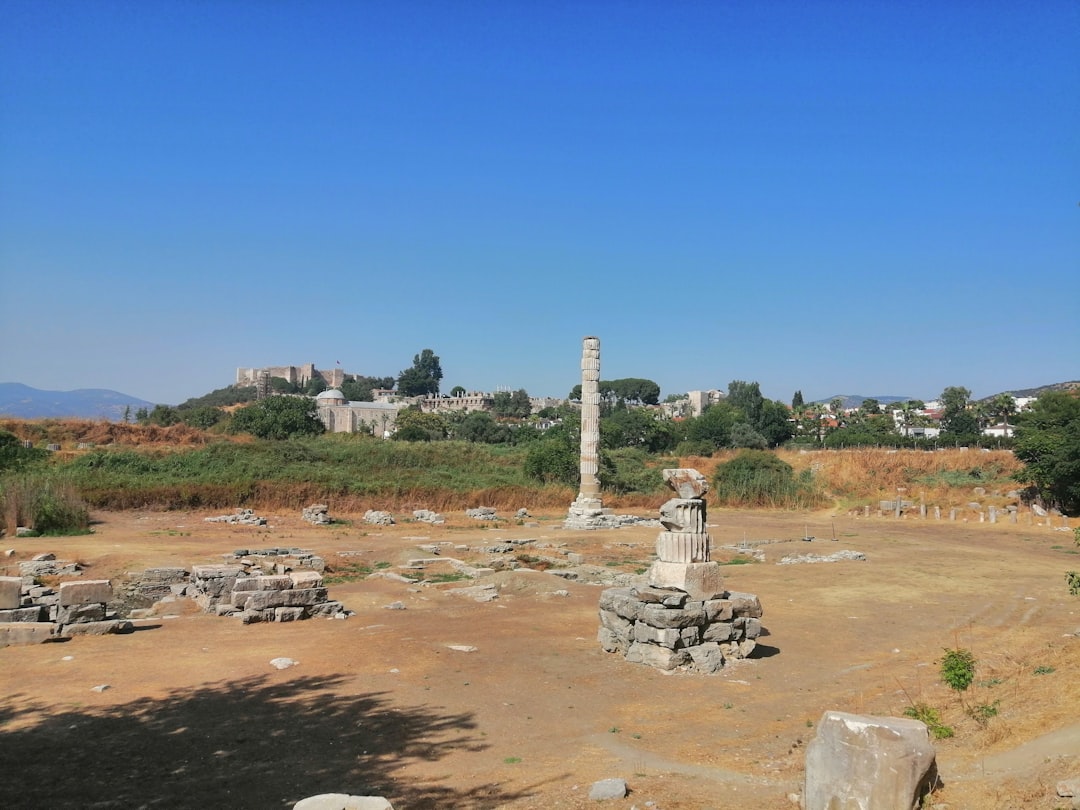
At its core, the Temple of Artemis and Library of Celsus anchor Ephesus as a crossroads of faith, commerce, and civic life. Artemis embodies ancient pilgrimage and devotion; the Library of Celsus shows Roman architectural and literary ambition. Together they frame the city’s streets, markets, and public spaces, offering a tangible window into how residents lived, prayed, and learned in antiquity.
Two monumental remnants anchor Ephesus as a living narrative of ancient religion and urban life. Here, the Temple of Artemis—once celebrated as a wonder of the ancient world—meets the Library of Celsus, a Roman-era monument to literacy and public learning. This guide helps you visualize their scale, understand why they mattered, and plan a respectful, enriching visit to the Ephesus ruins.
Why Ephesus matters: Temple of Artemis and Library of Celsus
The Temple of Artemis and the Library of Celsus sit at opposite ends of a single cultural spectrum in Ephesus: sacred memory and civic ambition. Artemis, revered across Ionia, drew pilgrims and traders along the city’s great streets toward a temple that symbolized both devotion and protection. The Library of Celsus, erected in the early Roman era, welcomed readers and visitors with a façade that reads like a finale of stone—an architectural statement about knowledge, public life, and memory. Together, they anchor the site’s grand narrative of religious culture, commercial prowess, and the everyday life of an ancient metropolis.
Understanding their roles helps you read more of the stones you’ll walk among. The temple’s ruins hint at a broader religious landscape that shaped festival calendars, pilgrim routes, and even the harbor’s activity. The library’s presence reminds us that literacy and civic pride were valued as much as monuments and markets. When you stand on the marble thresholds, you’re standing at the hinge between faith and literacy, between ritual space and civic library—two dimensions that defined how Ephesians organized time, labor, and public memory.
Visiting responsibly means letting these ruins speak for themselves. Leave no trace, follow marked paths, and take time to notice how the light changes across the Artemis foundations and the library’s ornate façade. If you’re curious about how those stones were quarried, carved, and arranged to survive centuries of weather and foot traffic, you’re not alone. Local guides can illuminate the craftsmanship and the daily life that once animated these spaces. Stay curious. See you on the next neighborhood corner. — Nova Calder.
Key concepts: Artemis temple and Library of Celsus
Core concepts to hold in your pocket as you explore: Artemis’s temple is a symbol of Ionian devotion and monumental scale—its legend survived in texts and later travelers’ imaginations even after the temple itself faded. The Library of Celsus embodies Roman architectural ingenuity and the city’s commitment to learning; its facade, with columns, niches, and inscriptions, was designed to welcome readers and to claim a civic space for knowledge. The juxtaposition of these two landmarks reflects a city that traded, prayed, and debated ideas on the same streets.
In terms of layout, Ephesus was a grid of public life: monumental gates, a bustling agora, and a theater that hosted performances and political gatherings. The temple stood near ceremonial routes that aligned with religious calendars, while the library faced a public street, inviting discourse and commerce. When you compare their forms, you glimpse two centuries of architectural vocabulary—the column orders, the carved pediments, and the careful alignment with sightlines that made each structure a stage for communal life.
Practical takeaway: the Artemis site invites contemplation of myth and ritual, while the Library’s façade invites closer reading of Roman inscriptions. If you can, pause at the inscriptions to appreciate how Latin and Greek cultural currents intersected at Ephesus. This is where the city’s longing for wisdom and its sacred landscape intersect, offering a memory map of how people lived, believed, and learned here. Stay curious. See you on the next neighborhood corner. — Nova Calder.
Step-by-step visit: plan your route through Artemis and Celsus
Step-by-step approach for a thoughtful visit. Start at the primary approach where the causeway meets the outer precincts. From there, orient yourself toward the Artemis foundations first; the scale becomes more legible when you walk the accompanying side paths and note the alignment with the harbor’s ancient routes. Then turn toward the Library of Celsus; study the two-story façade, the niches, and the inscription that honors Celsus. Take time to read the signs that interpret both monuments’ original functions.
Next, move along the main thoroughfare toward the agora and the theater. The path between these spaces reflects how daily life, commerce, and performance intermingled with religious and scholarly life in antiquity. If you want context, hire a local guide or take a short audio-guide option to hear the stories behind the carvings, the inscriptions, and the construction choices that make these ruins feel accessible rather than abstract stone. Remember to stay on the designated paths and avoid touching fragile surfaces to help preserve the site for future visitors.
Practical tips for the visit: wear comfortable footwear for uneven marble and later paving, bring water for warm days, and plan a mid-day break at the shade near the theater area. If you’re photographing, be mindful of crowd flow and avoid blocking others’ views. For those hungry for more, consider a short detour to nearby signage that explains how the city’s civic spaces connected to daily life, from markets to lectures. Stay curious. See you on the next neighborhood corner. — Nova Calder.
Common mistakes and how to avoid them
Common mistakes that can dull the experience—and how to avoid them. One, rushing through the site without slowing to observe details. Artemis’s calves and capitals tell stories about artisans and religious rituals; the Library’s inscriptions demand a closer look. Two, wandering off marked paths. The ruins are delicate; stray foot traffic can damage delicate surfaces. Three, neglecting context: a stone is not just a stone; it’s part of a larger urban plan that linked harbor, market, and sanctuary.
Other pitfalls include assuming the site is only “ruins.” Instead, treat it as a palimpsest of daily life—trade routes, religious festivals, and educational aspirations that shaped a Mediterranean city. Bring a notebook or a sketchpad to capture details you might otherwise forget—the font, the depth of the relief, the way light shifts on a column drum. If you’re visiting with children, frame questions about what people ate, wore, or read in ancient Ephesus to make the experience tactile rather than abstract. And if you’re planning more Turkish travel, read about nearby destinations like Antalya or Istanbul to place Ephesus in a broader context. Discover Antalya, and Unveiling Istanbul offer complementary scenes to this ancient core. Turkey’s visa requirements post-visit can be found in dedicated guides as you plan the next leg of your journey. Stay curious. See you on the next neighborhood corner. — Nova Calder.
Frequently Asked Questions
What is the Temple of Artemis at Ephesus famous for?
The Temple of Artemis at Ephesus is renowned as one of the ancient world’s most celebrated religious monuments. It symbolized sacred devotion and urban prominence within the Ionian city. Though the temple itself no longer stands, its historical aura survives in stories, bas-reliefs, and the ruins that visitors can still imagine as they walk along the precinct where ritual life once unfolded.
Where is the Library of Celsus and what can I learn from its façade?
The Library of Celsus stands in the heart of the ancient city’s theater precinct, facing a main street and the public spaces that framed daily life. Its two-story façade features elegant columns, niches, and an inscription praising Gaius Julius Celsus Polemaeanus. It offers a window into Roman public architecture and literacy—an urban monument built to host readers and to honor a local governor who funded its construction.
What should I know before visiting the Ephesus ruins to make the most of the experience?
Before visiting, plan for comfortable footwear, sun protection, and plenty of water. Check official hours and accessibility options, hire a local guide for authentic context, and stay on marked paths to protect fragile surfaces. Read the signage to connect the stones with daily life: markets, worship, and education. Respect the site, engage with the stories, and let the walk unfold at a human pace.